
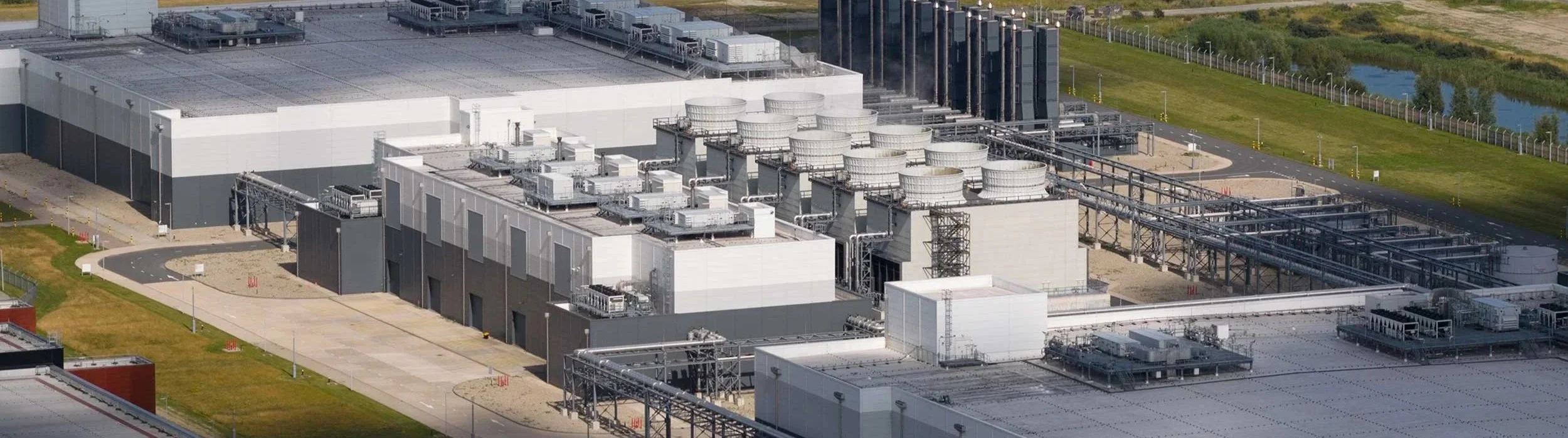
Data Centers
Data centers are essential critical infrastructure for storing, processing, managing and securing massive amounts of data that power our digital world.
What do data centers do?
-
Store and manage data:
Data centers house the servers, storage devices, and network equipment necessary for organizations to store and manage vast amounts of data.
-
Process data:
Data centers process information for a wide range of applications, from simple websites to complex AI models.
-
Power digital services:
Data centers enable most digital services, including social media, streaming, video conferencing, and online shopping.
-
Provide security:
Data centers help protect data from cyber threats and physical breaches that individuals and businesses cannot replicate on their own.
Why are data centers critical?
-

Reliability:
Data centers ensure that services are consistently accessible and critical operations are not interrupted.
-

Scalability:
Data centers allow businesses, governmental agencies, schools, and other entities to easily scale their IT infrastructure up or down based on changing needs.
-

Disaster recovery:
Data centers provide a redundancy and backup power, which is critical for disaster recovery.
-

Accessibility:
Data centers make data and applications accessible to users anywhere. Increased digital processing demands are the result of technological advancements. Many businesses would not have the resources to keep pace with digital processing needs without data centers.
What are some of the things in daily life that rely on data centers?
-
Education
online textbooks, research, and virtual learning.
-
Healthcare delivery
store, secure, and manage the data generated by medical devices, patient records, and healthcare operations.
-
Streaming services
Netflix, Disney+, and Hulu.
-
Social media
Instagram, YouTube, TikTok, FaceBook and WhatsApp.
-
Online services
banking, shopping, and website hosting.
-
Virtual assistants
Alexa and Siri.
-
Home security
Ring, Blink and other wireless systems.
-
Governmental operations
online portals to pay taxes, file for unemployment, and renew hunting and fishing licenses.
-
Document storage
business, governmental and individual document and image storage.

What are the benefits of having data centers in Wisconsin?
National security: Data centers are strategic assets. Computing capacity and AI are the modern-day global power equivalent of the nuclear arms race. Wisconsin should be at the forefront of ensuring the United States is safe.
Economic impact: A single data center can generate a $10B+ investment in Wisconsin, thousands of skilled construction jobs, hundreds of new full-time high-tech jobs for daily operation, and increased tax revenue for state and local governments.
Growth: It is no secret that Wisconsin has lost jobs in several key sectors, including manufacturing and forestry. Wisconsin should take advantage of the global data center race and capture as large a share as possible in this growth industry.